
From Original Photograph to Conceptual Final Image
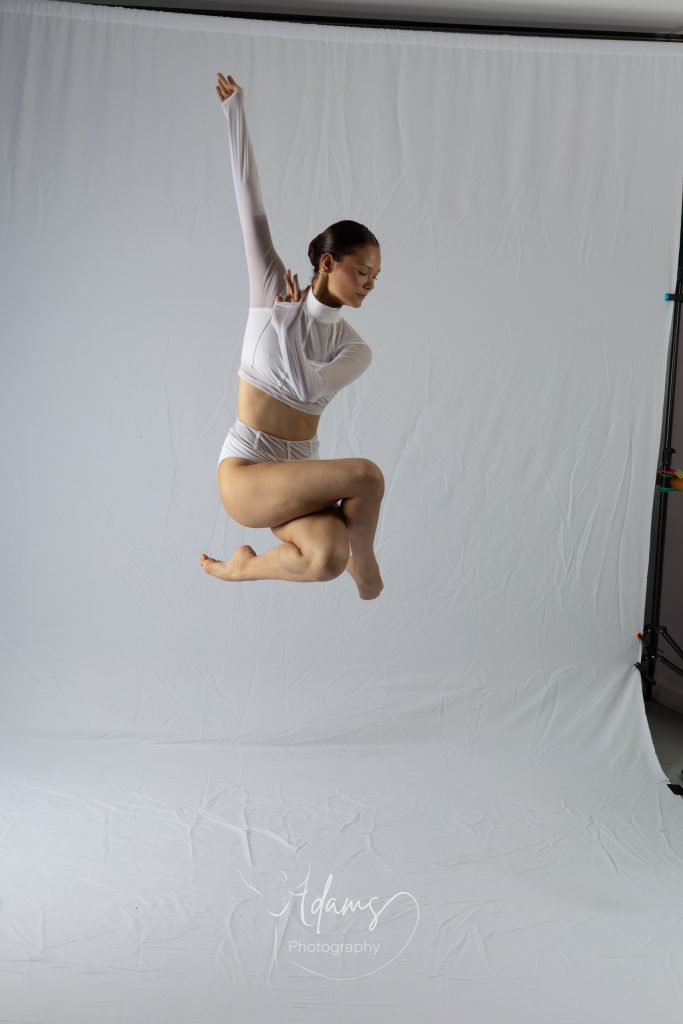
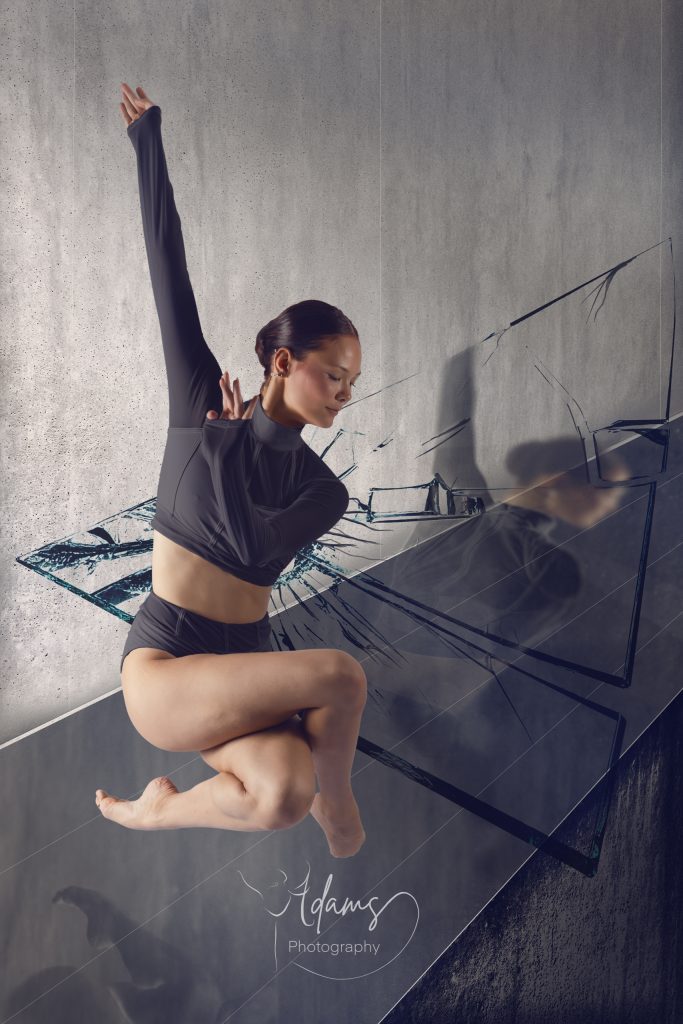
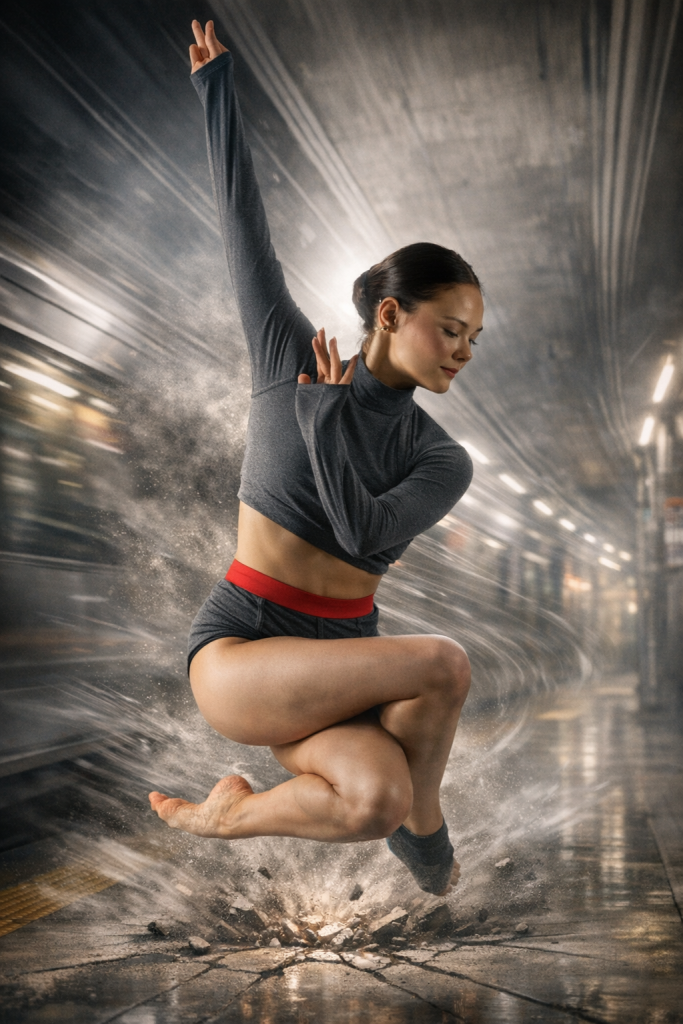
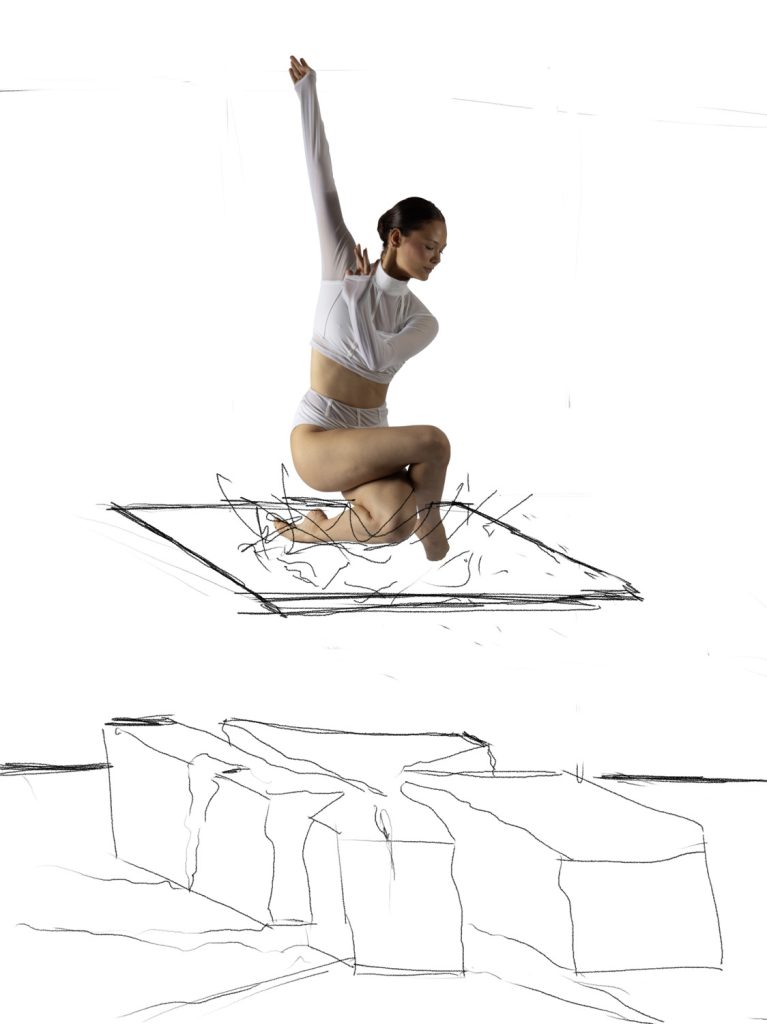
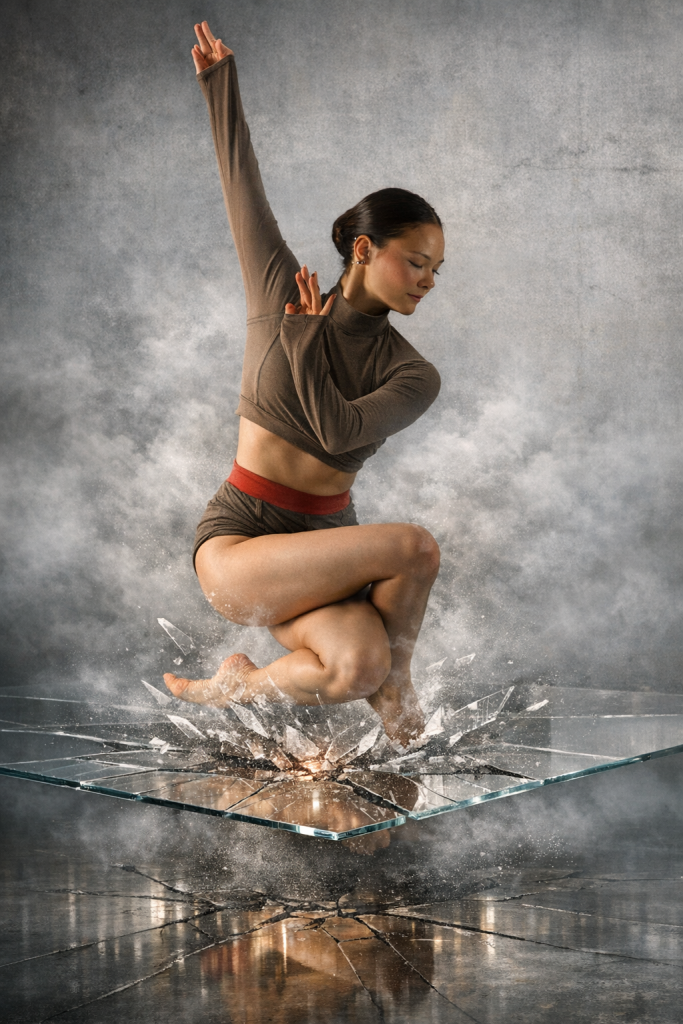
This entire journey began with a single photograph — a real dancer, captured mid‑air in the studio, suspended in a moment of pure movement. The original frame had no glass, no fractures, no architectural tension. Just a body in motion, lit cleanly, held in space. But as I sat with the image, I felt there was something deeper inside it — a sense of rupture, lift, and emotional pressure that wasn’t yet visible.
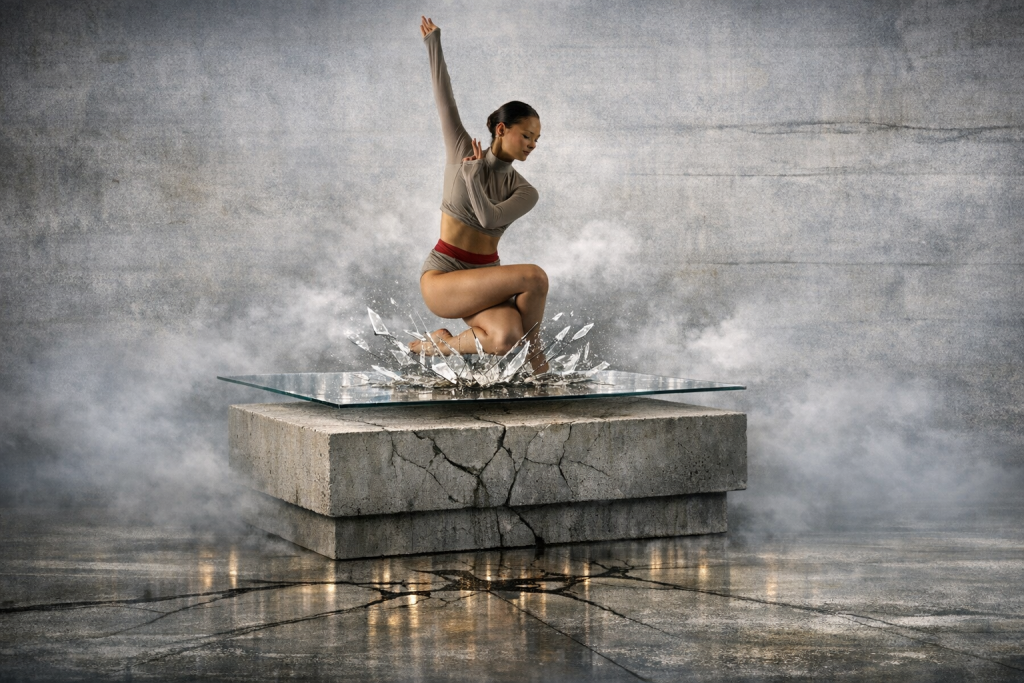
That’s where the transformation began. What started as a straightforward dance portrait evolved into a conceptual composite through a process of exploration, iteration, and collaboration — not just with my own instincts and technical skills, but with AI and Photoshop as a creative partner. The final image is still rooted in that original photograph, but it has grown into a world that didn’t exist in the frame. A world built through conversation, experimentation, and a willingness to push beyond what the camera captured.
The Journey Behind It
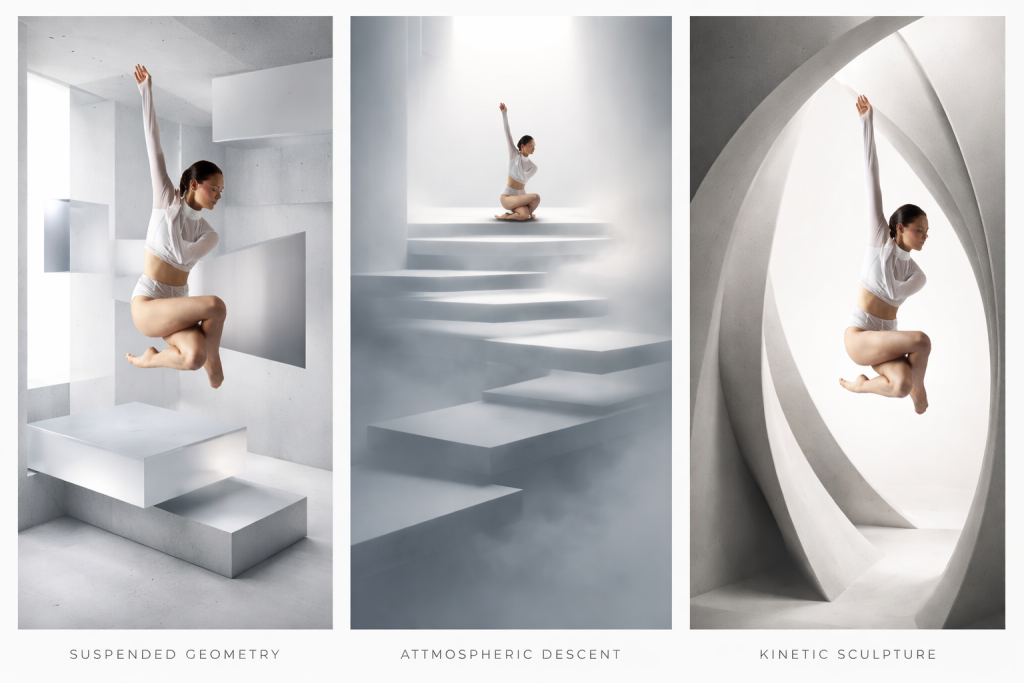
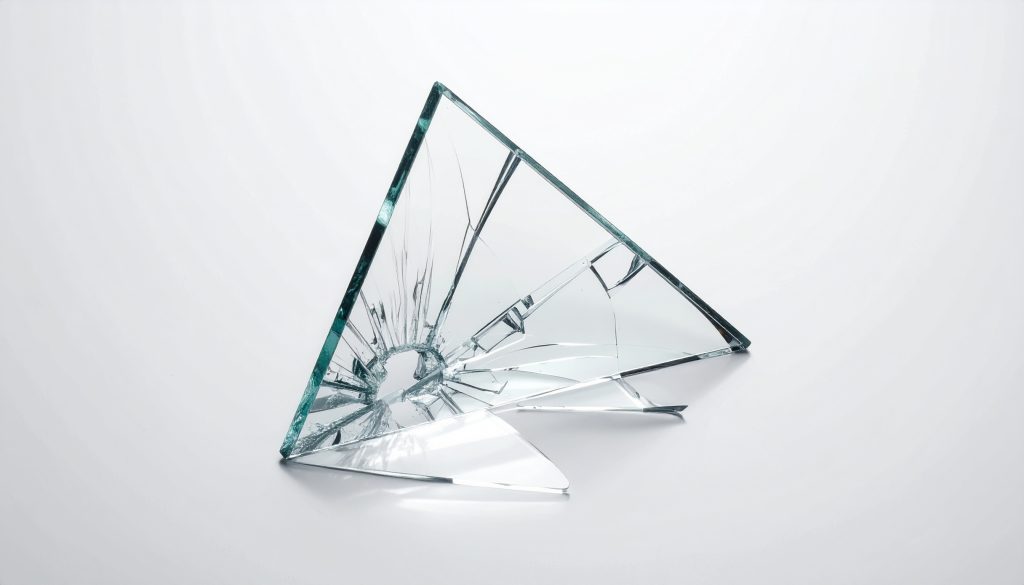
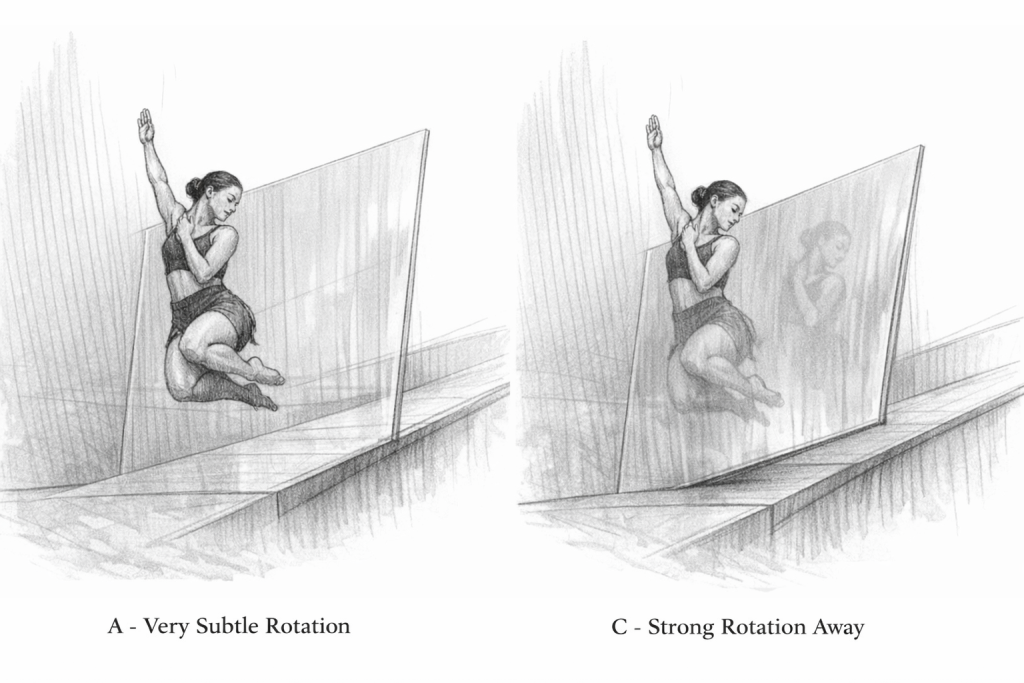
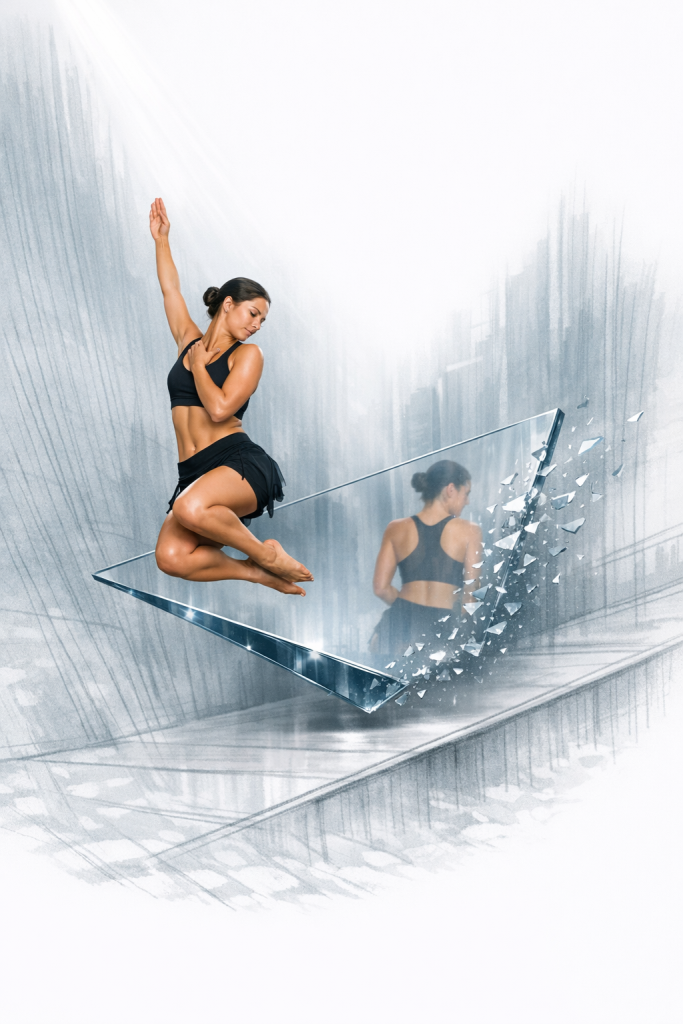
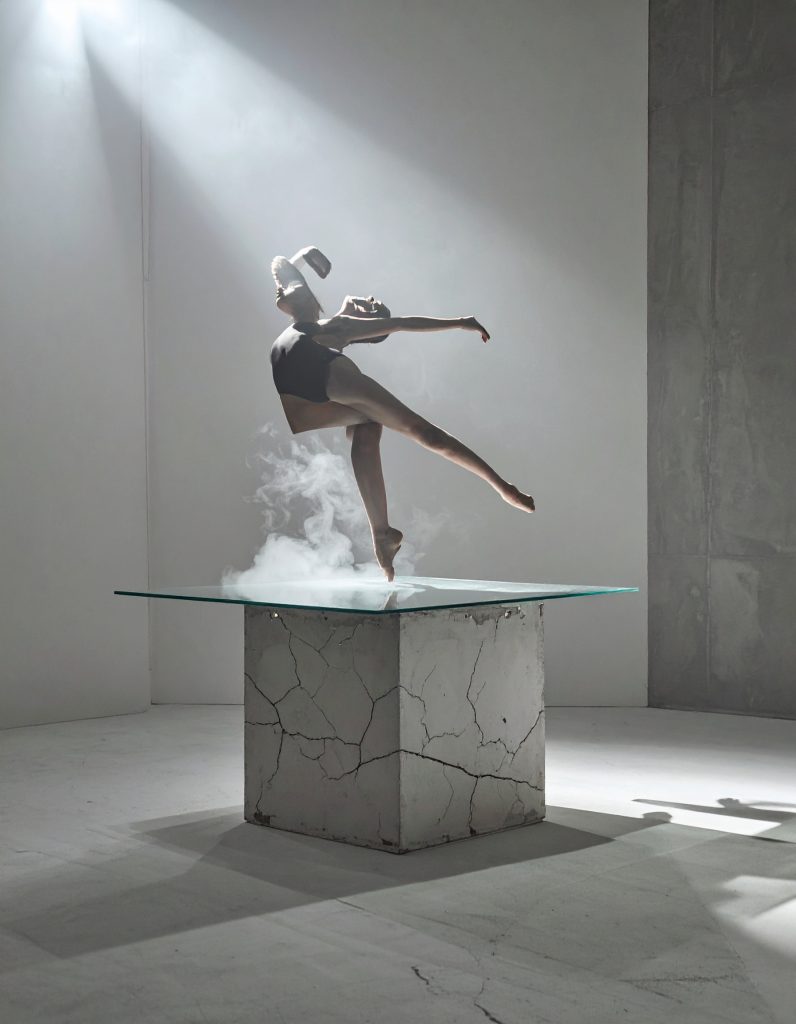
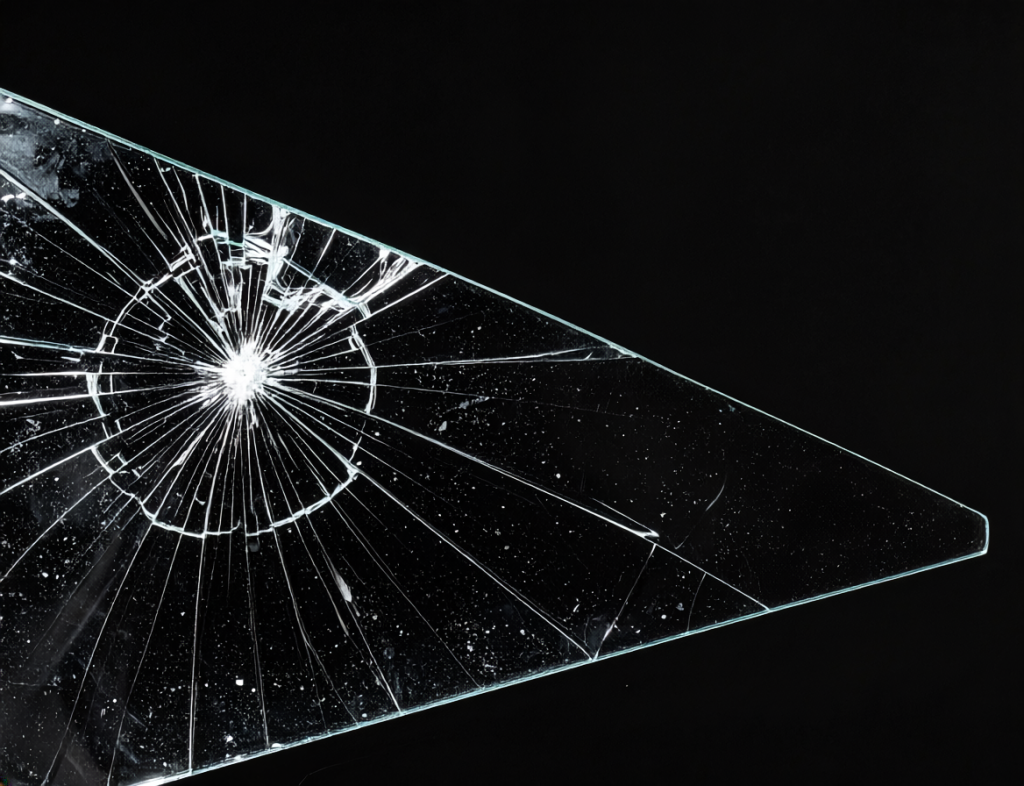
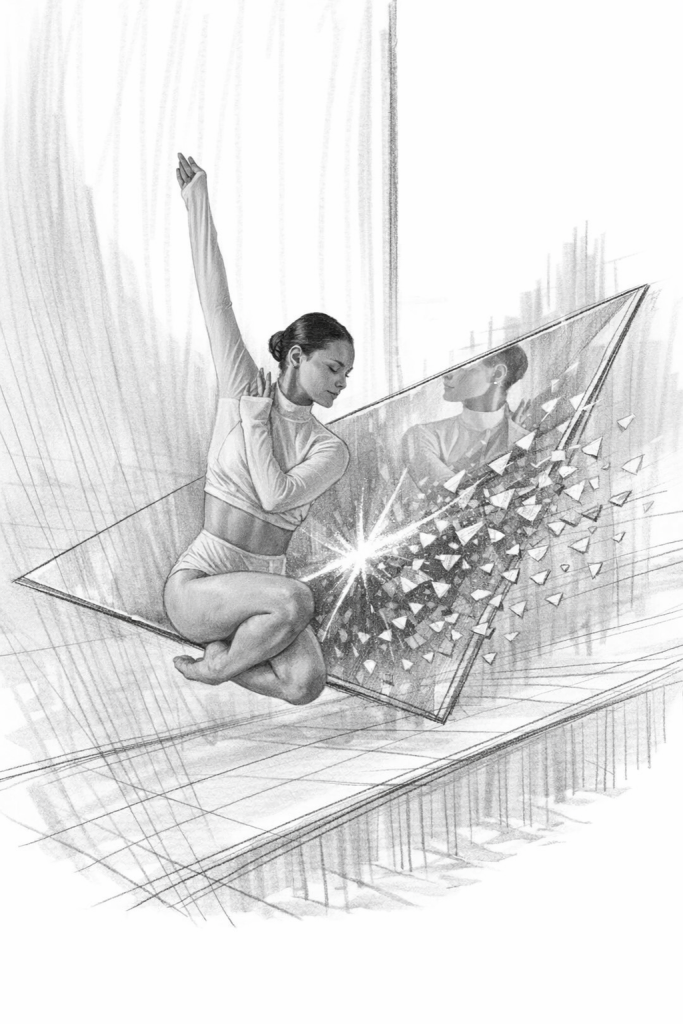
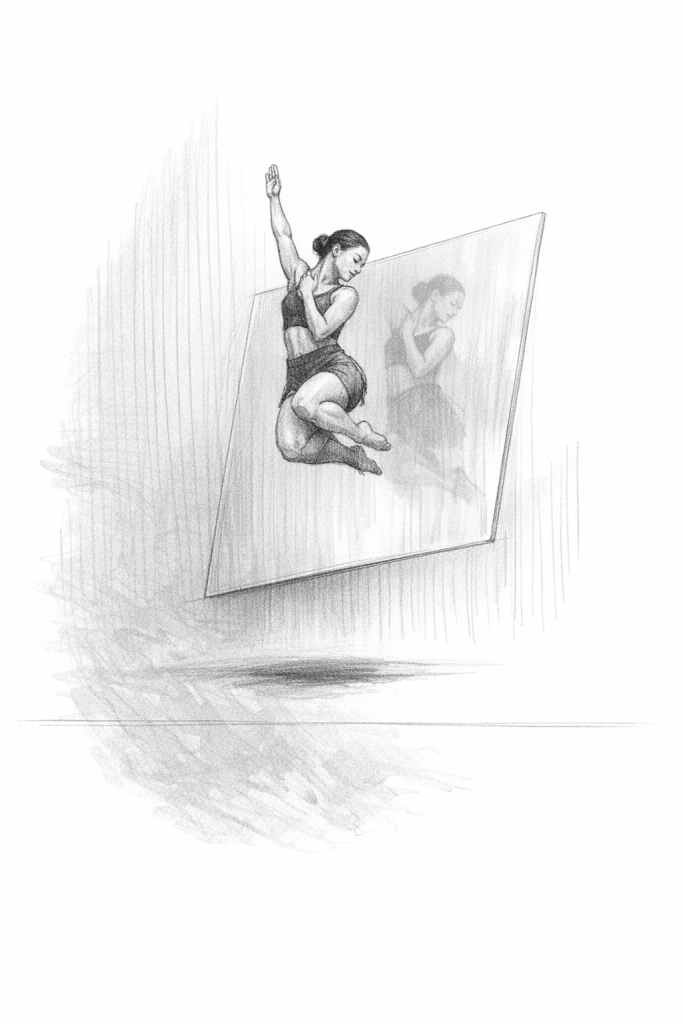
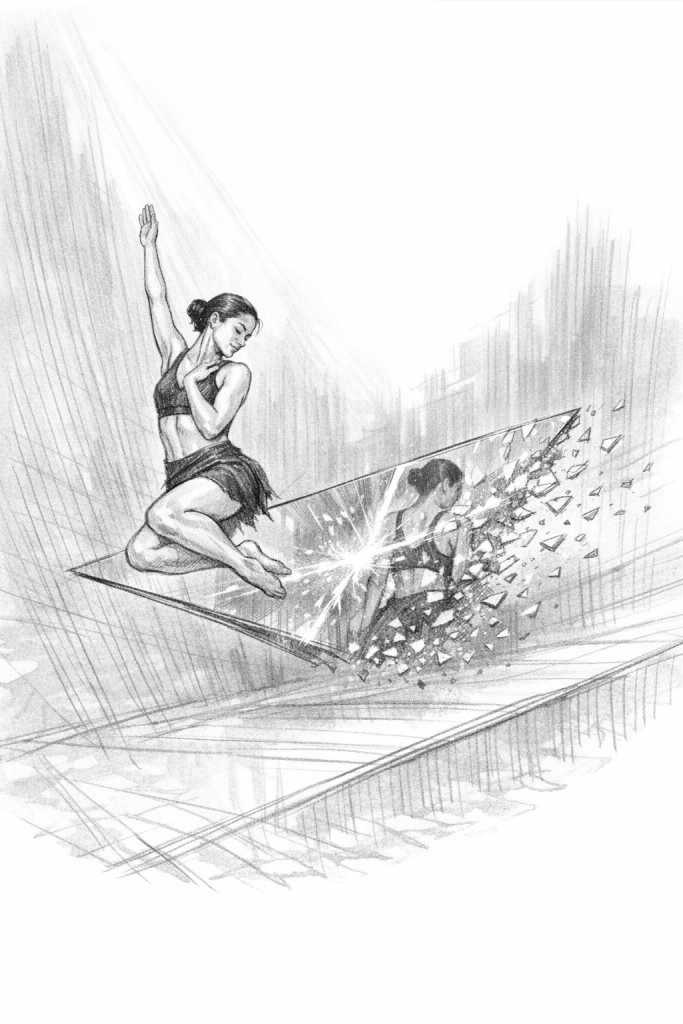
Before diving into the story, I want to show the full arc of this piece — not just the polished final image, but the sketches, tests, and conceptual drafts that shaped it. This project wasn’t a straight line. It was a conversation — between instinct, experimentation, and the evolving possibilities of AI‑assisted creativity, and the endless abilities of Photoshop.
Creating in a New Era
This image didn’t come from a single spark of inspiration. It came from a dialogue — between my ideas, my limitations, my curiosity, my skills and ability to learn new Photoshop techniques, and the iterative support of AI.
We’re in a moment where artists can think faster than they can execute. Where imagination outruns technique. Where concepts arrive fully formed in the mind but resist becoming real.
For many people, that gap is where ideas die.
But with AI, that gap becomes a workspace.
This project is my way of leaning into that — openly, transparently, and without shame. Not as a shortcut, but as a collaborative tool that helps me explore, refine, and push concepts further than I could alone.
The Concept: A Moment of Suspended Tension
The heart of this image was always the same: a dancer suspended mid‑air, held in a moment that feels both fragile and powerful.
I wanted:
- lift without weightlessness
- tension without violence
- architecture without literal structure
- a fractured plane that feels symbolic, not destructive
The idea arrived as a feeling — a sense of rupture and release — and the challenge was building a world that could hold that emotion.
Working With AI as a Creative Partner
This is where AI became essential.
I used AI not to replace my vision, but to interrogate it. To test spatial logic. To explore variations. To push the concept into places I wouldn’t have reached alone.
Across dozens of iterations, I explored:
- different fracture rhythms
- different spatial planes
- different airborne cues
- different emotional reads
- different balances between realism and abstraction
Some versions grounded the dancer. Some made the glass too chaotic. Some lost the emotional clarity.
But each iteration — each conversation — sharpened the idea.
AI became a sketchbook that could think back. A collaborator that could challenge my assumptions. A tool that let me explore without fear of wasting time or resources.
Constructing a Space That Doesn’t Exist
The final environment is intentionally ambiguous — a concrete‑like void, a floor that exists only enough to orient the viewer, and a fractured plane that feels architectural but not literal.
The goal wasn’t realism. The goal was emotional believability.
AI helped me test:
- how much reflection is too much
- how shadows affect lift
- how haze changes depth
- how fracture patterns influence mood
Through iteration, the space became a character of its own — quiet, tense, and charged.
The Final Image: When Everything Clicked
The last 10% was where the image finally found its voice:
- the dancer’s lift became unmistakable
- the glass gained thickness and internal refraction
- the composition settled into a clean, intentional rhythm
- the atmosphere became restrained instead of decorative
It stopped being a composite and became a moment.
A moment of suspended tension. A moment between rupture and release. A moment that feels like it’s holding its breath.
Why I’m Sharing the Process
Because this is the future of creativity — not AI replacing artists, but artists using AI to amplify what they’re capable of.
There are so many people with expressive, powerful ideas who struggle to bring them into reality. AI can be the bridge. Not the author — the collaborator.
By showing the journey, not just the final image, I want to make space for that conversation. To show that using AI isn’t cheating. It’s evolving. It’s exploring. It’s expanding what’s possible.
And it’s absolutely worth talking about.
Closing Thoughts
This image is more than a finished artwork. It’s a record of a new kind of creative process — one where human intuition and AI iteration work together to build something neither could have made alone.
It’s not about perfection. It’s about possibility.
And this is only the beginning.
Comments are closed